The Founder’s Will: An Endowment for Generations
The Founder’s Will: An Endowment for Generation
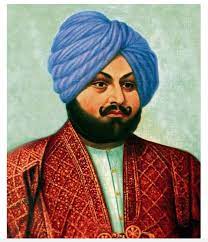
The establishment of Dyal Singh College was not an accidental development but the deliberate fulfillment of Sardar Dyal Singh Majithia’s educational vision. His will established trusts for three enduring public institutions: a first-class Arts College, a public library, and The Tribune. Significantly, the largest and most valuable portion of his estate was dedicated to the proposed college.
The will envisioned a high-grade institution devoted to strong and liberal education. It provided for a college building, boarding facilities, books, equipment and a gymnasium, while emphasizing the physical, intellectual and moral development of students. The institution was also intended to function broadly as a non-sectarian college committed to high academic standards.
This founding philosophy placed education, intellectual openness and public service at the heart of what would become Dyal Singh College Lahore.
From Union Academy to Dyal Singh College
According to the college’s institutional historical record, Sardar Dyal Singh Majithia established the Union Academy in Lahore in 1881. The academy operated in the historic Haveli of Sardar Dhian Singh near Taxali Gate and represented an early expression of Dyal Singh’s commitment to accessible and progressive education. Following his death in 1898, the institution became known as Dyal Singh High School.
The broader educational vision eventually culminated in Dyal Singh College Lahore, formally inaugurated on 3 May 1910 by Sir Louis Dane. N. G. Velinker became its first Principal, and teaching began in Mathematics, English, History, Economics, Sanskrit, Physics, Chemistry and Persian.
The new institution expanded rapidly. Astronomy was established in 1912; the college magazine, Union, and the Dramatic Society followed in 1913; girls were admitted to First Year Medical in 1914; Philosophy was introduced in 1916; and M.A. Mathematics began in 1917. Student societies, scientific facilities, sports, music and literary activities soon became integral parts of college life.
The expansion continued through subsequent decades. Journalism began in 1925, Punjabi and Bengali entered the curriculum in 1928, French and Zoology were introduced in 1930, and M.A. Political Science followed in 1935. The college celebrated its Silver Jubilee in 1934 with a special issue of its magazine.
Dyal Singh College and the Birth of Modern Punjabi Theatre
One of the most distinctive chapters in the cultural history of Dyal Singh College is its association with the development of modern Punjabi drama and theatre.
Soon after Professor Philip Ernest Richards joined the English Department, Norah Richards became actively involved in the cultural life of the college. She encouraged students to move beyond English-language theatrical performance and experiment with drama rooted in local language, culture and society.
A one-act-play competition organized in 1912 awarded first prize to S. S. Bhatnagar for Karamat. The following year, student Ishwar Chander Nanda won first prize for Dulhan. The play was staged in Dyal Singh Hall in 1914 and occupies an important place in the history of Punjabi stage drama.
Nanda later graduated from Dyal Singh College, completed his M.A. in English and returned to his alma mater as a teacher in the Department of English Literature in 1917. His later contribution to Punjabi drama illustrates how the college’s cultural environment helped transform student creativity into a wider literary movement.
The establishment of the Dramatic Society, literary societies, mushairas and the college magazine created an environment in which theatre, literature and public debate became part of education itself. This tradition would continue to influence generations of writers, actors, poets and filmmakers associated with Dyal Singh College.
A College Connected with the National Story
The history of Dyal Singh College intersects with several important moments in the political, intellectual and cultural history of the region.
On 5 March 1936, the college student organization Union hosted Quaid-e-Azam Muhammad Ali Jinnah, who attended its annual meeting and delivered an address.
The college celebrated Iqbal Day on 9 November 1938, demonstrating the place of literary and national thought in campus life. A year later, student Ejaz Husain secured first position in the All India Debating Competition, reflecting the strength of the college’s tradition of public speaking and intellectual debate.
The Partition of 1947 transformed the institution, but its intellectual life continued. Syed Abid Ali Abid became Principal in September 1947, beginning an important new chapter in the college’s history. Among the distinguished scholars associated with the post-Partition college was historian Dr. Riazul Islam, who taught History from 1948 to 1950 before later becoming a leading academic at the University of Karachi. Another remarkable faculty member was mathematician Professor Mehmood Anwar. The college’s institutional historical record credits his research with contributing to the standard-time arrangements adopted by Pakistan in the early years after Independence.
The Urdu Department also developed an extraordinary literary lineage. Allama Tajwar Najibabadi, who joined the college in 1921, remained associated with it until his death in 1951 and played an active role in Lahore’s literary culture. Following his death, Ashfaq Ahmed succeeded him as Lecturer in Urdu and taught at Dyal Singh College before beginning the wider literary, broadcasting and educational career for which he became nationally known.
From the Classroom to Literature, Film and National Culture
Across generations, Dyal Singh College has contributed personalities whose influence extended far beyond the campus. Among them was Khawaja Pervez, who graduated from Dyal Singh College in 1954 and later became one of the prominent lyricists associated with Pakistani cinema. Poet, dramatist and editor Khalid Ahmad studied at Dyal Singh College from 1957 and completed his B.Sc. in 1961 before establishing a distinguished literary career. Film writer and director Syed Noor graduated from the college in 1968. His proximity to Lahore’s newspaper and film world during his student years helped nurture an interest in journalism and storytelling that eventually developed into a major career in Pakistani cinema. He later received the Sitara-e-Imtiaz and became involved in film education and training for subsequent generations.
These figures, together with scholars, teachers, scientists, writers and performers associated with the institution, demonstrate that the legacy of Dyal Singh College extends beyond academic qualifications. Its classrooms, societies, laboratories, stage and literary gatherings have contributed to the intellectual and cultural life of Lahore and Pakistan for generations.